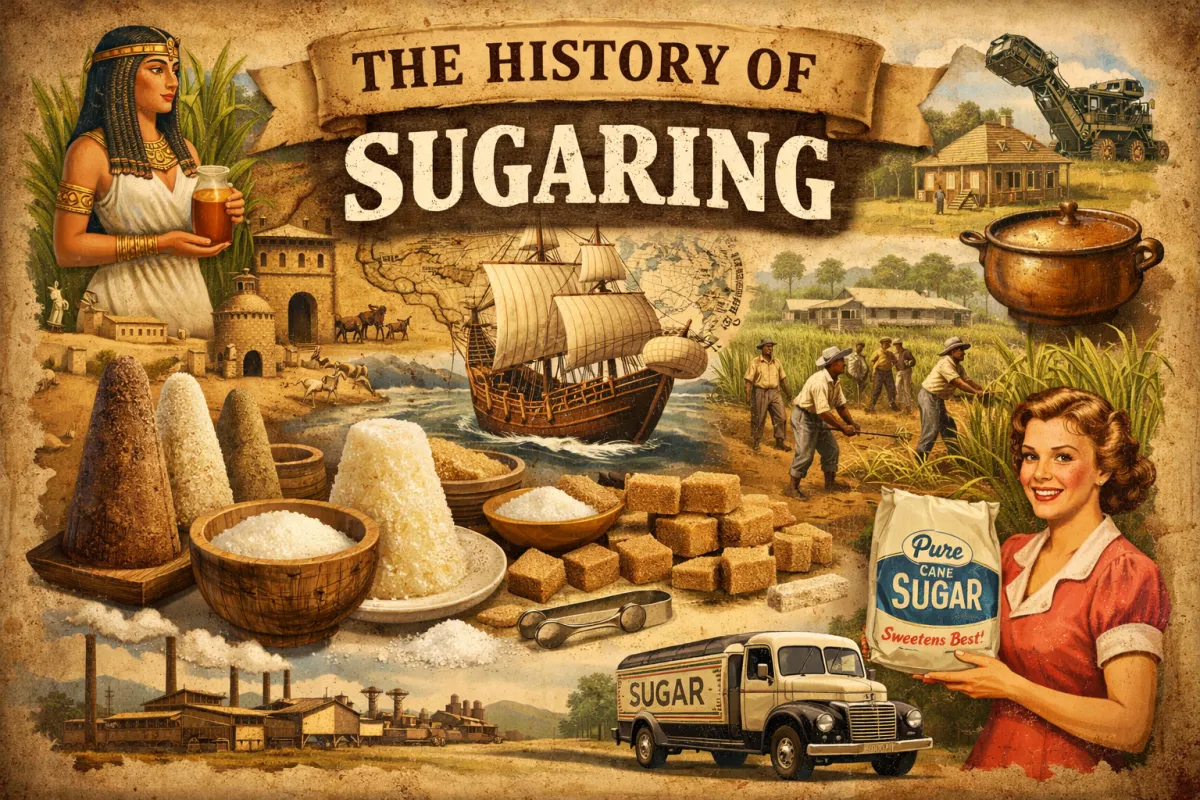
History of Sugaring
The Sweet Tradition: Exploring the History and Art of Sugaring Hair Removal.
In the quest for smooth, hair-free skin, humanity has explored various methods throughout history. One such ancient practice, with roots dating back thousands of years, is sugaring hair removal. This natural and effective technique has stood the test of time, evolving from ancient civilizations to modern beauty routines. Let's delve into the captivating history and intricate artistry behind sugaring.

Ancient Origins:
Sugaring finds its origins in ancient civilizations such as Egypt, Mesopotamia, and Greece. Historical records dating back to 1900 BC depict Egyptians utilizing a sugaring-like substance made from honey, oil, and lemon juice to remove unwanted hair. This early form of sugaring was not only a cosmetic practice but also held cultural significance, symbolizing cleanliness and beauty.
The Art of Sugaring:
At its core, sugaring involves applying a natural paste consisting of sugar, water, and lemon juice to the skin, then swiftly removing it, along with the unwanted hair. Unlike waxing, sugaring adheres only to the hair, minimizing discomfort and reducing the risk of skin irritation. The technique requires skill and precision, making it both a science and an art form.
Modern Revival:
While sugaring remained a well-kept secret in certain cultures for centuries, its popularity surged in the modern era as people sought alternatives to traditional waxing and shaving. Beauty enthusiasts and professionals alike have embraced sugaring for its natural ingredients, gentle approach, and long-lasting results. Today, sugaring has become a staple in spas and salons worldwide, offering clients a luxurious hair removal experience.
Benefits Beyond Beauty:
Beyond its efficacy in hair removal, sugaring offers a plethora of benefits for the skin. The natural ingredients used in sugaring paste are hypoallergenic and non-comedogenic, making them suitable for all skin types, including sensitive skin. Additionally, regular sugaring can lead to finer regrowth and reduced ingrown hairs, promoting smoother and healthier skin over time.
Cultural Significance:
Throughout history, hair removal practices have been intertwined with cultural norms and societal standards of beauty. In many cultures, smooth, hair-free skin is synonymous with femininity, cleanliness, and grooming. While the reasons for hair removal may vary across cultures and time periods, the art of sugaring remains a timeless tradition, connecting us to our ancestors and their beauty rituals.
Embracing Sustainability:
In an era marked by a growing awareness of environmental sustainability, sugaring stands out as an eco-friendly hair removal option. The simple ingredients used in sugaring paste are biodegradable and renewable, minimizing the ecological footprint compared to synthetic waxing products. By choosing sugaring, individuals can indulge in self-care while supporting eco-conscious practices.
Conclusion:
The history of sugaring hair removal is a testament to the ingenuity and resourcefulness of ancient civilizations. From its humble origins to its modern-day revival, sugaring has transcended time and cultural boundaries, leaving a sweet legacy in the world of beauty. As we continue to seek natural and sustainable alternatives, the art of sugaring shines brightly, offering a gentle and effective solution for smooth, radiant skin.


